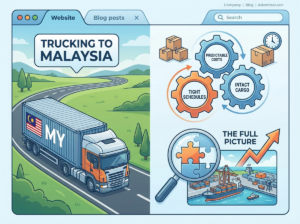
When you’re managing a supply chain into Malaysia, every logistics decision carries cost and timing consequences. You need a freight mode that keeps overheads predictable, cargo intact, and schedules tight. Trucking delivers on all three fronts — but the full picture of how and why requires a closer look at the specific cost structures, border dynamics, and scheduling advantages that make it work. The details matter more than you’d expect.
Why Trucking to Malaysia Cuts Your Logistics Costs
Trucking to Malaysia cuts logistics costs in ways that air and sea freight simply can’t match for regional shipments. You eliminate port handling fees, reduce transit delays, and maintain direct route control. Door-to-door delivery minimizes cargo transfers, lowering damage risks and labor expenses. When you’re moving goods frequently across borders, trucking to Malaysia delivers measurable savings that directly strengthen your supply chain’s financial efficiency.
The Key Border Crossings and Routes Into Malaysia
Knowing where your trucks cross into Malaysia directly shapes your cost structure and transit times. The Johor-Singapore Causeway and Second Link handle most freight from Singapore. Bukit Kayu Hitam serves northern Peninsular routes from Thailand. For East Malaysia, Kuching and Kota Kinabalu require sea connections. Match your route to your destination city to minimize dwell time and reduce unnecessary handling costs.
How Trucking to Malaysia Gives You Routing and Scheduling Control
Unlike air or sea freight, trucking into Malaysia puts scheduling decisions directly in your hands. You choose departure times, select most effective routes, and adjust dynamically when disruptions arise. Need to reroute around congestion at the Johor Causeway? You can. This flexibility lets you align deliveries precisely with production schedules, warehouse capacity, and customer commitments—reducing costly delays and improving overall supply chain predictability.
How Trucking to Malaysia Keeps Your Supply Chain on Schedule
Keeping your supply chain on schedule depends on more than just speed—it requires predictability, and that’s where trucking to Malaysia delivers a structural advantage. Fixed road corridors, consistent transit windows, and direct delivery eliminate the layover variables that air and sea freight introduce. You’re not waiting on vessel departures or cargo consolidation—your shipment moves on your timeline, reducing downstream disruptions across your entire operation.